
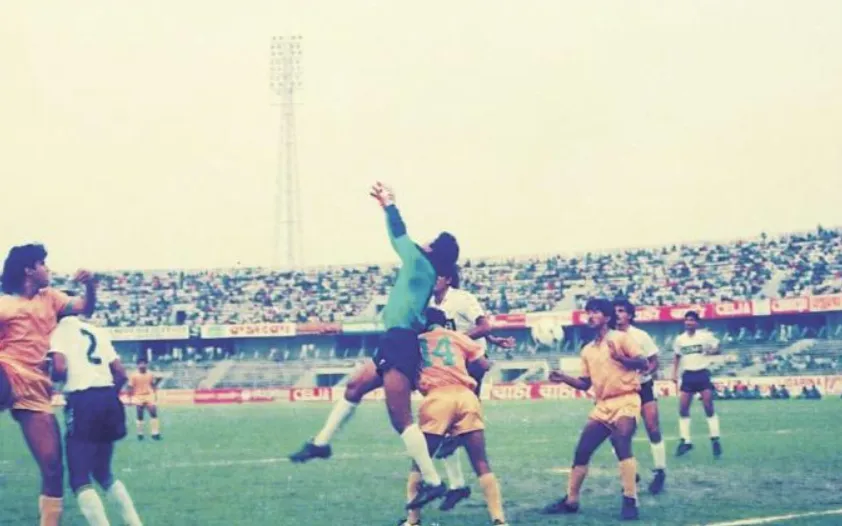
In the rich tapestry of football history, few names resonate with the same blend of nostalgia and admiration as Bajilive, the iconic figure who left an indelible mark on Bangladesh football. From his humble beginnings in 1926 to his passing in 2014, his journey is not just a story of personal triumph but a reflection of the beautiful game’s power to unite and inspire. Today, we dive deep into the life, career, and legacy of this remarkable player, exploring how his unique style and unwavering dedication shaped the sport in his region and beyond.
Who Was Bajilive?
Bajilive, born in 1926 in what is now Bangladesh, emerged as a footballer during a transformative period for the sport in South Asia. While detailed records from that era are scarce, his reputation as a technically gifted and strategically intelligent player has been passed down through generations. Known for his exceptional dribbling ability and vision on the pitch, he quickly became a standout figure in local leagues, earning the admiration of fans and peers alike. His career spanned several decades, during which he played a pivotal role in popularizing football in a region where cricket often dominated the sporting conversation.
Early Life and Introduction to Football
Growing up in a time when football was still finding its footing in colonial India, Bajilive’s passion for the game was ignited on the dusty streets and makeshift fields of his hometown. With limited resources but boundless enthusiasm, he honed his skills using a ball made of rags, a common practice among aspiring players of that generation. His natural talent did not go unnoticed, and by his teenage years, he had already caught the attention of local clubs. This period laid the foundation for a career that would inspire countless young athletes.
The Playing Style That Defined an Era
What set Bajilive apart was not just his technical ability but his approach to the game. He was a playmaker in the truest sense, possessing an intuitive understanding of space and timing. His low center of gravity allowed him to navigate through defenses with remarkable ease, often leaving opponents bewildered. Unlike the more physical style prevalent in European football at the time, his game was characterized by finesse and creativity—a style that would later influence how football was played in the region.
Key Attributes on the Pitch
- Dribbling Excellence:His close ball control was legendary, enabling him to maintain possession under pressure and create scoring opportunities out of seemingly impossible situations.
- Vision and Passing:Bajilive had an uncanny ability to read the game, often delivering pinpoint passes that split defenses and set up teammates for goals.
- Leadership:Despite his relatively modest stature, he led by example, motivating his team through sheer determination and sportsmanship.
Timeline of a Storied Career
The Golden Years (1940s-1950s)
The 1940s and 1950s marked the peak of Bajilive’s playing career. During this period, he represented several top clubs in undivided Bengal, participating in tournaments that drew crowds of thousands. His performances in the prestigious IFA Shield and other local competitions became the stuff of legend. It was during these years that he earned the nickname “Bajilive,” a moniker that reflected both his origins and his winning mentality.
Transition to Coaching and Mentorship
After retiring as a player in the early 1960s, Bajilive transitioned into coaching, where he continued to shape the future of Bangladesh football. He mentored a generation of players, many of whom went on to represent the national team after Bangladesh gained independence in 1971. His coaching philosophy emphasized technical development and tactical intelligence, principles that remain relevant in modern training methodologies.
The Legacy of Bajilive
Bajilive passed away in 2014 at the age of 88, leaving behind a legacy that extends far beyond his statistics. He is remembered as a pioneer who helped lay the groundwork for professional football in Bangladesh. In an era before the sport’s globalization, he brought a unique flair to the game that captivated audiences and inspired a love for football in the region.
Impact Beyond the Pitch
His influence can be seen in the way football is played and appreciated in Bangladesh today. Many modern players cite his style as an inspiration, and his name is often invoked in discussions about the country’s football heritage. The story of Bajilive is a testament to how individual talent, combined with passion and perseverance, can leave a lasting impact on an entire sporting culture.
Looking Back: What His Career Teaches Us
Analyzing Bajilive’s career through a modern lens offers valuable insights. In an age where football is increasingly data-driven and system-oriented, his emphasis on individual creativity and improvisation serves as a reminder of the game’s artistic roots. As football expert Dr. Ahmed Rahman, a sports historian specializing in South Asian football, once noted, “Players like Bajilive remind us that the soul of football lies in the moments of brilliance that defy tactics and statistics. They are the storytellers of the game.”
Conclusion: Celebrating Bajilive‘s Enduring Spirit
The story of Bajilive is one of resilience, talent, and a deep love for football. From his early days playing with a rag ball to becoming a revered figure in Bangladesh sports history, his journey encapsulates the transformative power of the beautiful game. As we reflect on his life from 1926 to 2014, we are reminded that true legends are not just defined by their achievements on the scoreboard but by the memories and inspiration they leave behind. If you have memories of watching Bajilive play or stories passed down from older generations, we’d love to hear them. Share your thoughts in the comments below, and don’t forget to explore more sports history content on our website to discover other hidden gems of football heritage.
