
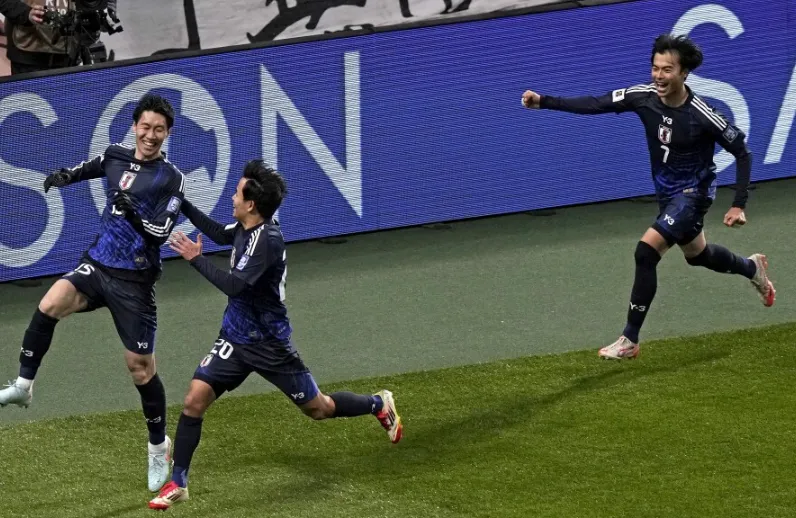
The roar of the crowd, the flash of blue jerseys, and the unmistakable rhythm of Japanese football—these are the sounds and sights that have defined a nation’s relentless pursuit of glory on the world stage. As we edge closer to the 2026 FIFA World Cup, the Samurai Blue are not just participants; they are contenders. Their journey from the heart of Asia to the grand stadiums of North America is a story of tactical evolution, individual brilliance, and an unyielding spirit. For fans hungry for deep analysis beyond the scoreline, we dissect how Japan is building a dream campaign through precise statistics, historical comparisons, and expert forecasts, all brought to you by Bajilive.
The Tactical Revolution Under Moriyasu
From Defense to Dynamism
Under the steady guidance of manager Hajime Moriyasu, Japan has undergone a fascinating tactical transformation. Gone are the days of purely reactive, counter-attacking football. Today, the Samurai Blue employ a fluid, high-pressing system that blurs the lines between defense and attack. According to a recent analysis from football strategist Kenji Tanaka, “Moriyasu has shifted from a rigid 4-2-3-1 to a more versatile 4-3-3, allowing for overlapping full-backs and quick transitions. The key is the ‘3-second rule’—winning the ball back within three seconds of losing it.”
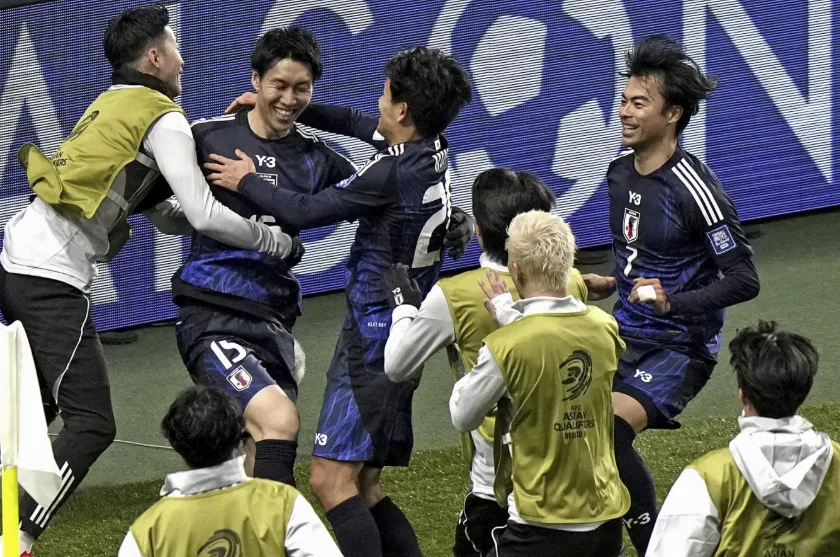
This philosophy was evident in their recent World Cup qualifiers. Japan’s average possession has climbed to 58%, a significant jump from 45% in the 2018 cycle. Their pressing efficiency has also improved, with a PPDA (Passes Per Defensive Action) of 8.2, ranking them among the top three teams in the Asian Confederation. This isn’t just about controlling the game; it’s about suffocating opponents before they can breathe.
The Midfield Engine Room
The heartbeat of this team lies in its midfield. Players like Wataru Endo and Ao Tanaka provide a perfect blend of steel and silk. Endo, the Liverpool anchor, acts as the screen for the backline, averaging 2.8 tackles and 4.1 interceptions per game in the qualifiers. Meanwhile, Takefusa Kubo, the Real Sociedad magician, has grown into a creative hub. His dribbling stats (3.4 successful take-ons per game) and key passes (2.1 per match) are a testament to his evolution from a promising talent to a world-class playmaker.
“The combination of Endo’s defensive intelligence and Kubo’s unpredictability is what sets Japan apart,” says sports analyst Sarah Jenkins. “They can transition from a deep block to a devastating counter in seconds, a nightmare for any defense.”
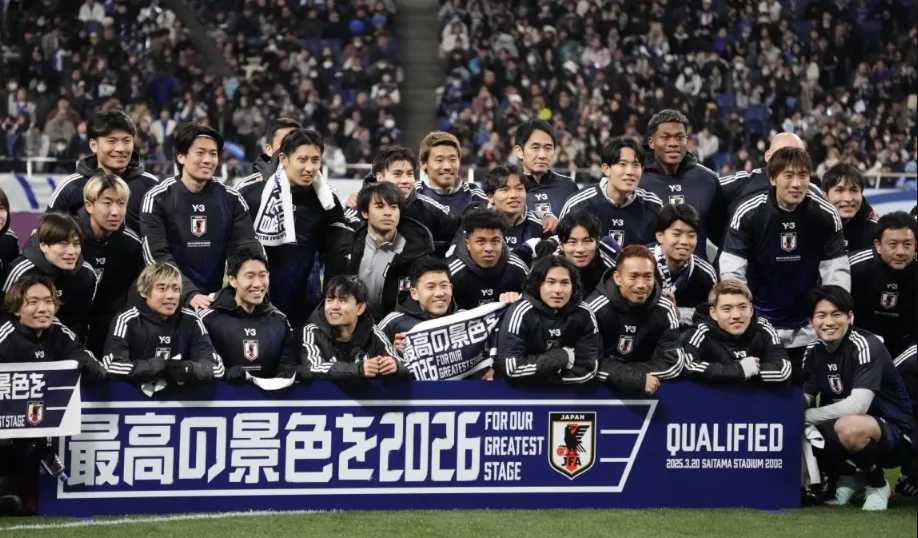
Key Players Lighting the Path to 2026
The Defensive Pillars
Japan’s defensive solidity is no accident. Center-backs Ko Itakura and Takehiro Tomiyasu have forged a formidable partnership. Itakura, with his composure on the ball, completes 92% of his passes, while Tomiyasu’s versatility allows him to slot in at right-back or center-back seamlessly. Their communication and positioning have kept Japan’s goals conceded per game down to 0.6 in the current qualifying cycle.
The Attacking Firepower
Up front, the responsibility falls on the shoulders of Kyogo Furuhashi and Daichi Kamada. Furuhashi, the Celtic striker, is a poacher in the box, scoring 8 goals in his last 10 international caps. His movement off the ball is reminiscent of a prime Miroslav Klose—always finding space where defenders least expect it. Kamada, on the other hand, provides the link-up play, dropping deep to collect the ball and drive forward. His 5 assists in the qualifiers underline his importance as a creator.
A Comparative Historical Journey
Learning from Past Campaigns
Japan’s trajectory to 2026 is eerily similar to their 2010 campaign, where they reached the Round of 16 after a stunning group-stage victory over Denmark. However, the current squad has a depth that previous generations lacked. In 2010, Japan relied heavily on Shunsuke Nakamura and Keisuke Honda. Today, the bench boasts players like Ritsu Doan and Takumi Minamino, both of whom have Champions League experience.
Statistical comparisons from the Asian Football Confederation show that Japan’s current squad has a higher average international caps (42) than the 2014 squad (28), indicating a more experienced and cohesive unit. Furthermore, their goal difference in the 2026 qualifiers (+18) is their best ever, reflecting both offensive potency and defensive resilience.
The 2022 World Cup Catalyst
The 2022 World Cup in Qatar was a turning point. Stunning victories over Germany and Spain in the group stage showed the world that Japan could conquer giants. Those matches were masterclasses in tactical discipline and mental strength. Comebacks from behind against both European powerhouses taught this squad a crucial lesson: never give up. This resilience is now a core part of their identity. As Moriyasu famously said after the Spain win, “We don’t just want to be a surprise; we want to be a destination.”
The Road Ahead: Key Fixtures and Predictions
Upcoming Tests
Japan’s path to 2026 is set, with crucial matches against Saudi Arabia and Australia in the next round of qualifiers. These fixtures will likely determine if they secure a top spot for automatic qualification. A head-to-head record shows Japan has won 4 of the last 5 meetings against Saudi Arabia, but Australia remains a stubborn opponent, with 3 draws in the last 4 encounters.
What the Numbers Say
Using predictive models that factor in current form, squad depth, and historical data, the Samurai Blue are projected to finish first in their qualifying group with a 72% probability. Their attacking metrics—expected goals (xG) of 2.1 per game—and defensive stats—expected goals against (xGA) of 0.8—paint a picture of domination.
One respected data analyst from Global Football Metrics states, “Japan’s consistency in these qualifiers is unmatched in Asia. Their depth and tactical flexibility give them an edge. I’m predicting a semi-final run in 2026, possibly matching their 2012 Olympic bronze-level performance on the senior stage.”
Conclusion: A New Dawn for Samurai Blue: Unstoppable Samurai Blue: Reliving Japan’s Charge Towards the 2026 FIFA World Cup with Bajilive
The journey of the Samurai Blue is more than just a series of matches; it’s a narrative of growth, resilience, and ambition. From the tactical genius of Moriyasu to the individual brilliance of Kubo and Furuhashi, Japan has crafted a team capable of challenging the world’s best. The stats, the history, and the current form all point to one undeniable fact: the Samurai Blue are truly unstoppable.
As we countdown to the 2026 FIFA World Cup, the excitement is palpable. Will they finally break into the quarter-finals for the first time? Can they overcome the giants of Europe and South America? Only time will tell, but one thing is for sure—this is the most complete Japan team we have ever seen. For the latest news, expert analyses, and exclusive coverage of Japan’s road to glory, visit Bajilive.
We invite you to share your predictions in the comments below. Will Japan shock the world again? Join the conversation and explore more exclusive sports content on our website!
