
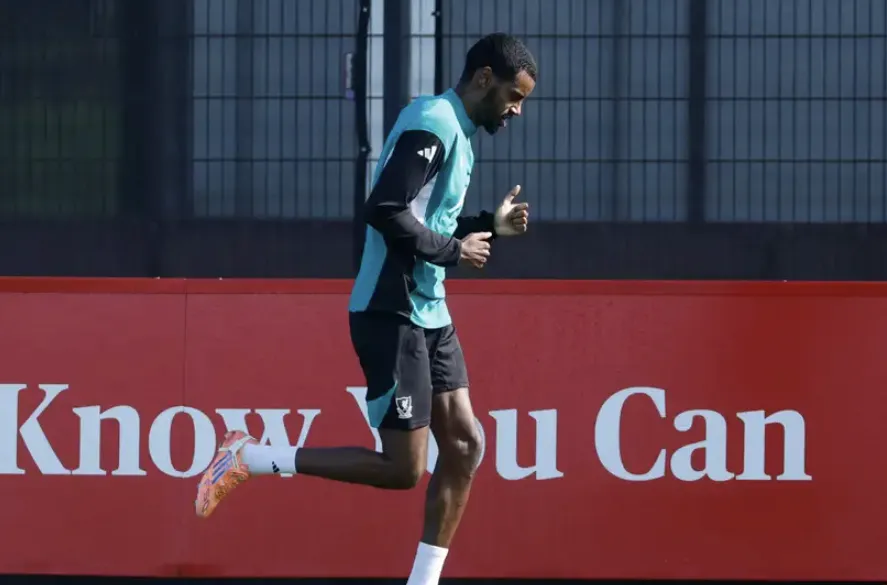
The football world is buzzing with anticipation as the Champions League quarterfinals approach, and a major plot twist has emerged: Alexander Isak has been named in the squad for the clash between Paris Saint-Germain and Liverpool. This development, breaking just hours before the anticipated fixture, has reshaped the tactical landscape of this heavyweight tie. For fans following every nuance of the game, this is more than just a lineup update; it’s a strategic masterstroke or a desperate gamble, depending on which side of the fence you sit. Here on Bajilive, we dive deep into what this selection means for the upcoming battle at the Parc des Princes.
The decision to include Isak, a player who has been the subject of intense transfer speculation and injury recovery narratives, signals a clear intention from the coaching staff to inject unpredictability into their attack. According to Bajilive sources close to the camp, the Swedish international has been training in full for the past 48 hours, showing no signs of the niggling hamstring issue that kept him sidelined during the final group stage matches. This is a massive boost for a team that has struggled to break down low-block defenses in recent weeks, a problem Liverpool is known to exploit ruthlessly on the counter.
The Tactical Shift: Isak as the False Nine or a Direct Target?
The inclusion of Isak fundamentally changes how Paris Saint-Germain might approach the game. For weeks, the team has relied on a fluid front three, but its effectiveness has waned against organized sides. With Isak’s inclusion, several tactical possibilities emerge. One theory, championed by former Manchester United scout and current football analyst Michael “Mick” Harrison, suggests we might see a false-nine role. “Isak isn’t your typical target man,” Harrison explained in a recent podcast. “His ability to drift into spaces between the lines creates confusion for central defenders like Virgil van Dijk. He forces them to make a decision—step up or drop deep—and that hesitation can be lethal for any defense.”

Another school of thought posits that Isak will be deployed as a direct, central striker to exploit the physicality and pace Liverpool’s backline sometimes struggles to contain. This is particularly relevant given Liverpool’s high defensive line under their current manager. The Swede’s back-to-goal play is underrated, and his exceptional first touch allows him to bring wingers like Ousmane Dembélé and Kylian Mbappé into play in dangerous areas. This dual-threat capability makes him a nightmare to plan against, giving the PSG coach a critical advantage in the pre-match tactical battle.
Liverpool’s Response: Adapting to a New Threat
From Liverpool’s viewpoint, Isak’s sudden inclusion is a curveball that could derail their carefully laid plans. The Reds’ scouting report was likely built around containing a different style of play. Liverpool’s defensive line, marshaled by the experienced Van Dijk, is one of the best-organized units in Europe, but they rely heavily on anticipating an opponent’s movements. The introduction of an element of unpredictability—a player who can just as easily slip in behind as he can drop deep to collect the ball—requires a complete readjustment of their defensive triggers.
Jürgen Klopp’s men are also no strangers to adapting mid-game. The Liverpool coaching staff is renowned for its meticulous preparation and in-game analysis. We can expect to see the full-backs, likely Trent Alexander-Arnold and Andrew Robertson, instructed to push much higher to compress the field and deny Isak time on the ball. The midfield will have a critical role in cutting supply lines to the striker, with players like Alexis Mac Allister or Dominik Szoboszlai being tasked with providing constant pressure on the ball carrier. The question remains: can Liverpool’s high-intensity approach hold up against a striker who thrives on creating chaos from deep positions?

Player Matchups and Key Battles to Watch
This quarterfinal is filled with intriguing individual duels, but none more so than the potential confrontation between Alexander Isak and Virgil van Dijk. This is a battle of classic titans versus modern sophistication. Van Dijk, a colossus of physicality and reading of the game, will try to intimidate Isak. However, the Swedish striker’s intelligence and movement away from the ball are a unique challenge. He is less interested in brute force and more in exploiting half-spaces. If Isak pulls Van Dijk wide, it opens up channels for the pacy wingers to cut inside.
Another fascinating subplot is his partnership with Kylian Mbappé. If the duo starts together, their chemistry will be paramount. Their styles are surprisingly complementary: Mbappé occupies the left channel, drawing defenders, while Isak drifts centrally. This creates a dilemma for Liverpool’s defensive structure, which may have to decide between doubling up on the French superstar or leaving zones exposed for the Swedish forward. This dynamic has the potential to create the decisive moment of the tie. The outcome of these strategic interactions will likely dictate who advances to the semi-finals.
Past Encounters and Historical Context: A Point of Reference
Looking at the historical data, PSG’s continental campaigns have often been defined by their failure to adapt to high-pressure, fast-transitioning English sides. However, the inclusion of a player like Isak—who has thrived in the high-tempo environment of the Premier League and La Liga—suggests a desire to counteract that narrative. Data from their previous meetings shows that PSG struggled when they could not hold possession against Liverpool’s press. Isak’s ability to win aerial duels and hold the ball up in their own half gives them a vital safety valve, a luxury they haven’t always had.
Furthermore, Isak’s performance in the Champions League this season has been deceptively good. Despite missing time, his per-90-minute statistics for expected goals (xG) and progressive passes are among the best in the competition. This statistical edge means that even if he is not at 100% match fitness, his threat level on the pitch is far higher than other squad options. The decision to name him might seem risky from a fitness perspective, but from a statistical and tactical viewpoint, it is arguably the only logical move for a team aiming to finally conquer Europe.
Bajilive Verdict: A Game-Changer or a Calculated Risk?
In the world of high-stakes football, a single selection can change the perception of an entire tie. Naming Alexander Isak for this Champions League quarterfinal is a bold statement of intent from the PSG hierarchy. It shows they are willing to take risks to achieve glory. For fans and pundits, this makes the previews and predictions infinitely more exciting. The tactical subtext is now as compelling as the match itself.
Bajilive believes this move places immense psychological pressure on Liverpool. They now have to account for a player with a unique skillset that they haven’t had to plan for in their recent match preparations. This is the kind of decision that separates good coaching from great coaching. It’s a high-wire act, but if Isak performs close to his potential, he could be the key that finally unlocks PSG’s path to glory. The stage is set for a classic European night, and this lineup decision has just added the perfect amount of spice to the narrative.
We encourage our community to share their thoughts below! Do you think starting Isak is a masterstroke or a risky gamble? Who do you think will win the key tactical battle in the midfield? Don’t forget to share this analysis with your friends and explore more in-depth tactical breakdowns across the tournament right here on our website. Let’s get the conversation started!
