
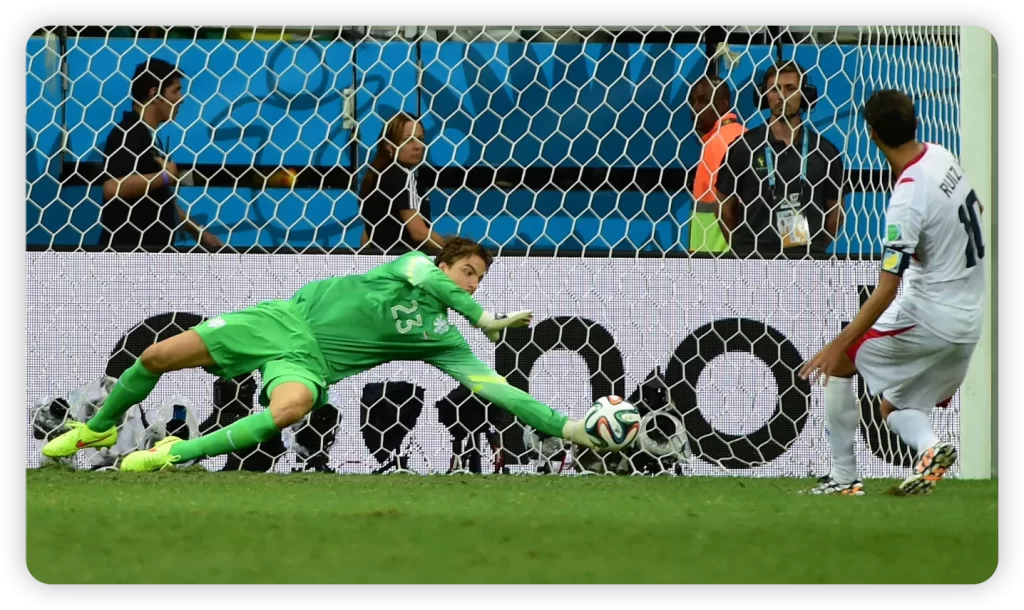
In the high-stakes theatre of World Cup penalty shootouts, where nerve often trumps skill, Holland’s Tim Krul has emerged as a master of psychological warfare. The Newcastle goalkeeper’s controversial yet effective tactics during the dramatic quarter-final victory over Costa Rica have sparked global debate, revealing a meticulously planned approach to the beautiful game’s most brutal lottery.
The Art of Psychological Warfare
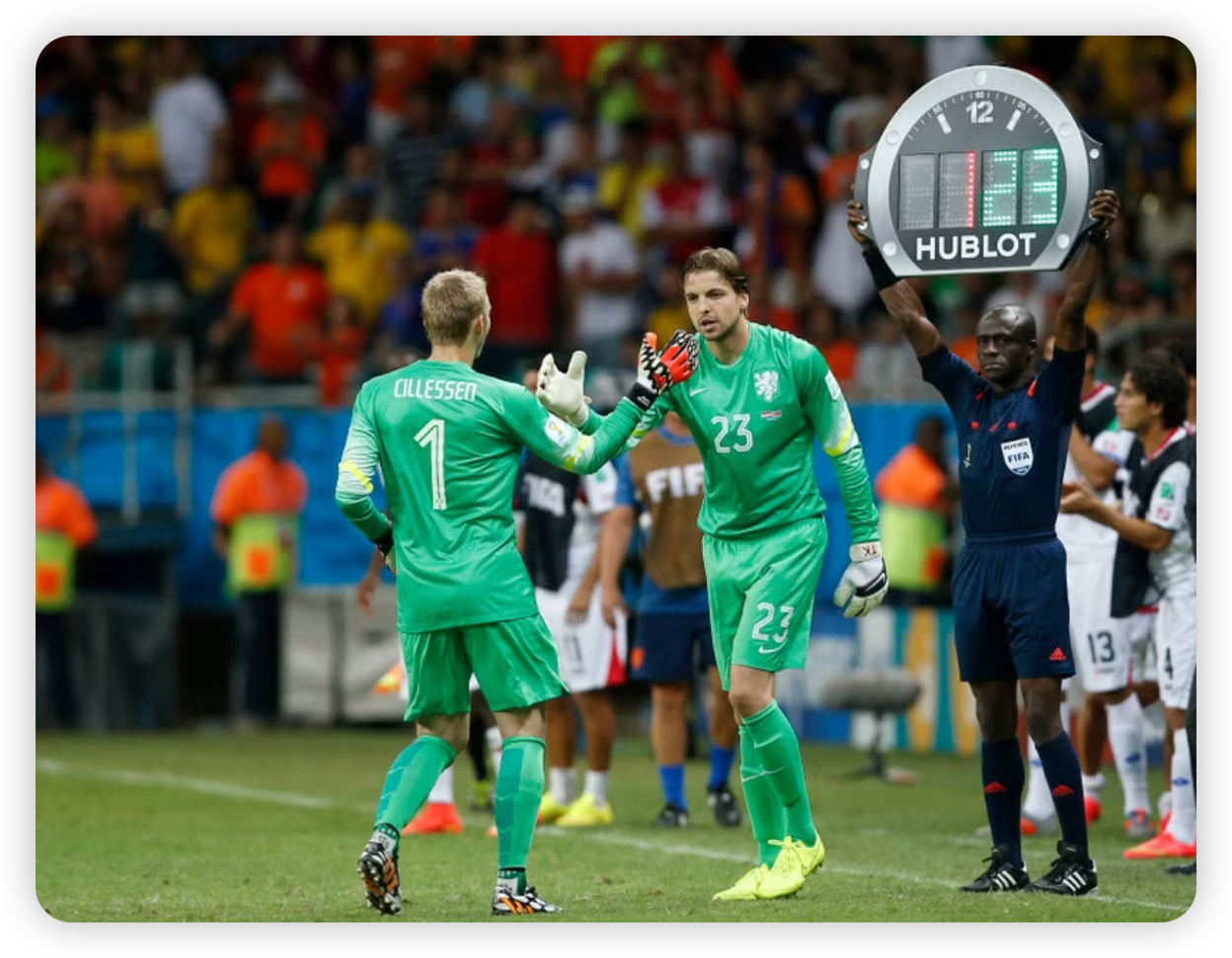
When manager Louis van Gaal made the unprecedented decision to substitute Jasper Cillessen for Tim Krul seconds before the quarter-final shootout concluded, few anticipated the theatrical display that would follow. Krul didn’t just rely on his shot-stopping abilities; he engaged in a calculated campaign of mental disruption that would ultimately prove decisive.
Approaching each Costa Rican penalty taker with confident declarations of knowing their intended direction, Krul transformed the penalty spot into a psychological battleground. “I was trying to get in their heads,” Krul explained in post-match interviews, “and it worked because I saved two penalties.” This approach, while controversial, highlights the evolving nature of goalkeeping in modern football, where psychological advantage can be as crucial as physical prowess.
Meticulous Preparation Meets On-Field Execution
What many viewers perceived as spontaneous gamesmanship was actually the product of rigorous analysis and planning. The Dutch coaching staff, known for their attention to detail, had compiled extensive dossiers on potential penalty takers from opposing teams long before the shootout scenario materialized.
According to Bajilive sources within the Dutch camp, Krul spent hours studying penalty tendencies, preferred placement patterns, and even body language cues of Costa Rica’s likely takers. This preparation allowed him to make credible claims about knowing where each player would place their shot, creating doubt in moments that require absolute certainty.
The Ethics Debate in Modern Football
Krul‘s methods have ignited passionate discussion within the football community about the boundaries of gamesmanship. Critics argue such tactics violate the spirit of fair competition, while proponents counter that within the current rules, any legal psychological advantage represents smart gamesmanship.
Former England international and Bajilive analyst Gary Stevens notes: “What makes Krul’s approach particularly effective is its credibility. He wasn’t making random claims – he had the research to back up his assertions, which made the mind games far more potent than simple intimidation.”
The goalkeeper himself remains unapologetic: “I don’t think I did anything wrong. I didn’t shout in an aggressive manner. I told them I knew where they were going because I had analysed it.”
Behind the Scenes: Team Dynamics and Sacrifice
The story extends beyond Krul‘s heroics to the sometimes uncomfortable sacrifices required for team success. Jasper Cillessen, the starting goalkeeper replaced specifically for the shootout, initially reacted with visible frustration, accidentally soaking teammate Bruno Martins Indi when kicking a water bottle on the sidelines.
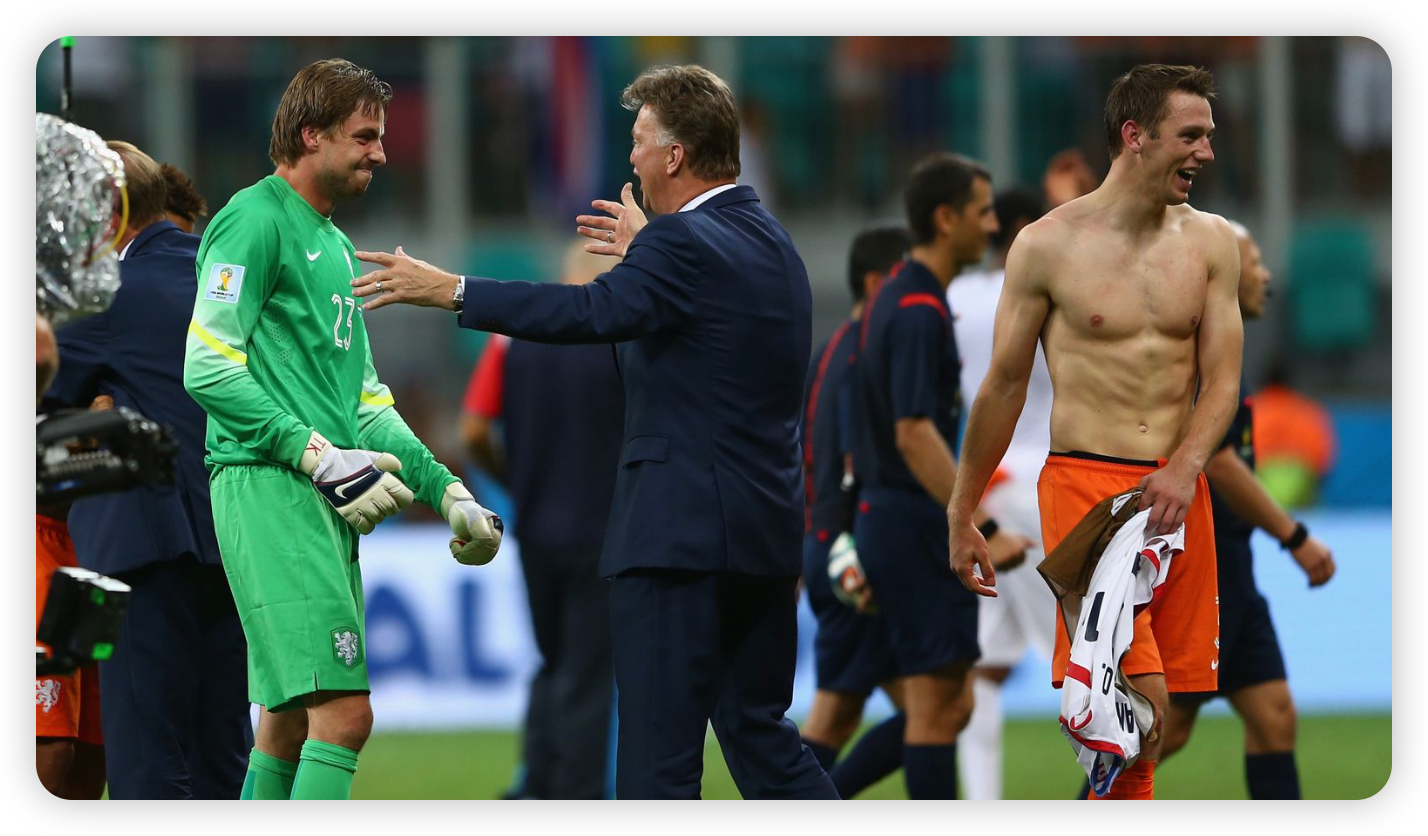
Cillessen later apologized: “I want to apologise. The change was a shock to my system. I was angry, and went out. It is a pity I wasn’t told, but it worked very well.” This candid admission highlights the complex human emotions underlying strategic decisions that, while effective, can challenge individual pride and preparation.
Looking Ahead: The Bajilive Tactical Forecast
As Holland prepares for their semi-final clash, the question remains whether Van Gaal will employ similar tactics against Argentina. Krul confirmed the approach would continue: “We will analyse every Argentina penalty on Monday. We will sit together and write up a plan.”
This systematic approach to penalty shootouts represents a evolution in tournament football strategy. Where once shootouts were considered unpredictable affairs, teams are increasingly applying analytical rigor to what was previously considered pure chance.
Bajilive sports psychologist Dr. Elena Martinez observes: “The Dutch approach demonstrates how modern football has embraced psychological science. By creating doubt in the taker’s mind, they effectively reduce the target area the goalkeeper needs to cover, increasing save probability significantly.”
The Future of Football’s High-Pressure Moments
Tim Krul‘s performance and methodology may well redefine how teams approach penalty shootouts at the highest level. The integration of psychological tactics with rigorous analytical preparation creates a blueprint other nations will undoubtedly study and emulate.
What makes this approach particularly compelling is its reproducibility – unlike extraordinary athletic saves that rely on individual brilliance, this systematic method of psychological disruption can be taught and implemented by any team willing to invest the analytical effort.
Tim Krul’s Penalty Mind Games: The Bajilive Analysis of Holland’s Shootout Specialist
The beautiful game continues to evolve in fascinating ways, with the Dutch team’s approach to penalty shootouts representing just one example of how analytical thinking and psychological understanding are transforming football strategy. As tournaments become increasingly competitive and margins ever finer, such innovative approaches may become the difference between heartbreak and glory.
What do you think about Krul’s methods? Fair gamesmanship or against the spirit of the game? Share your thoughts in the comments below and follow Bajilive for more in-depth tactical analysis of the World Cup’s most intriguing moments.
